What Is a Vinyl Record? How Records Work and Why Vinyl Still Matters
Vinyl records have made a remarkable comeback in an era dominated by music streaming, wireless speakers, and digital downloads. For many listeners, playing a record is about more than simply hearing a song. It is a slower, more intentional way of experiencing music, combining physical artwork, analogue sound, careful equipment selection, and the ritual of listening from beginning to end.
But what exactly is a vinyl record? How can a thin piece of plastic store music? Why do records sound different from digital audio? And with millions of songs available instantly online, why are people still buying turntables and building vinyl collections?
This guide explains how vinyl records work, what makes analogue playback different, how to choose records and equipment, and why vinyl continues to matter to modern music lovers.
What Is a Vinyl Record?
A vinyl record is a physical analogue audio medium used to store and reproduce recorded music. Unlike a digital music file, which stores audio as numerical data, a vinyl record stores an analogue representation of the sound in a physical groove.
The record is typically made from polyvinyl chloride, commonly called PVC or vinyl. Its surface contains a continuous spiral groove that begins near the outer edge and moves toward the centre.
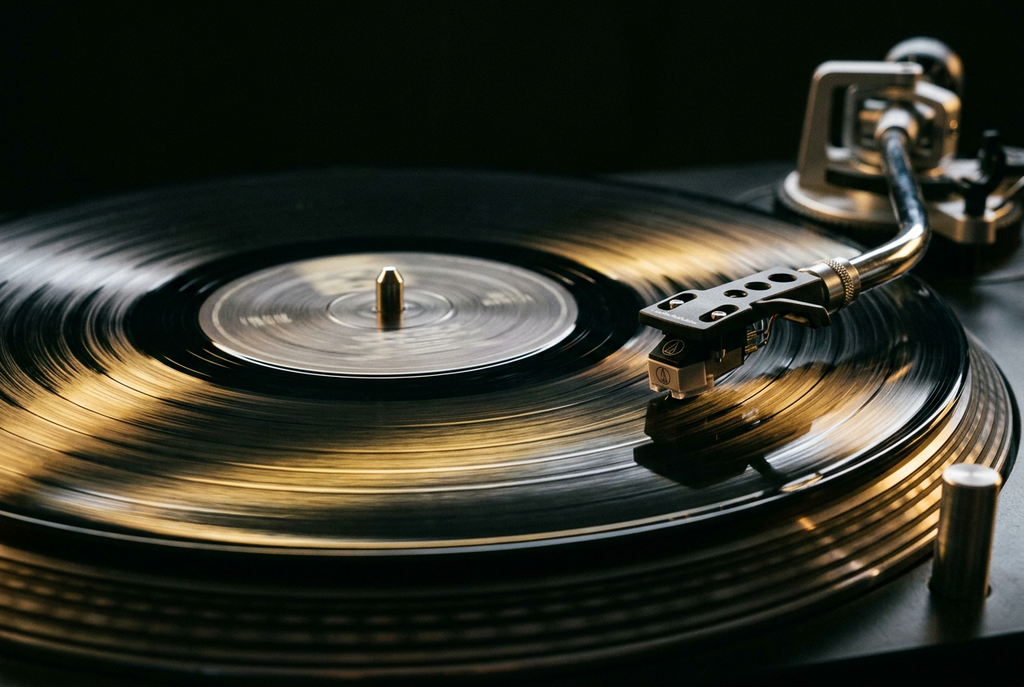
When a record is played, a stylus, commonly known as a needle, travels through this groove. The physical movement of the stylus is converted into an electrical audio signal, which is then amplified and sent to speakers.
In simple terms:
Music recording → record cutting → physical groove → stylus movement → electrical signal → amplification → speakers → sound
That physical process is at the heart of the vinyl listening experience.
How Does a Vinyl Record Work?
The technology behind vinyl may appear simple, but the process is remarkably precise.
When music is prepared for vinyl, the audio signal is used to control a cutting lathe. The cutting stylus physically creates a microscopic groove on a master disc.
The groove contains tiny variations that represent the recorded audio waveform.
During playback, the turntable rotates the record at a controlled speed. The stylus follows the groove, moving in response to its microscopic changes.
Those movements are picked up by the cartridge.
The cartridge converts mechanical movement into an electrical signal. That signal then passes through the appropriate amplification stage before reaching the speakers.
The speakers convert the electrical signal back into mechanical movement, causing the speaker drivers to move air and produce the sound you hear.
So, although a vinyl record is a physical object, it effectively contains a physical representation of the music waveform.
What Are the Main Parts of a Vinyl Record?
Understanding the anatomy of a record can make the format much easier to appreciate.
1. The Groove
The groove is the most important part of the record. It is a continuous spiral that contains the information required to reproduce the music.
The groove is microscopic, which is why it cannot be properly understood just by looking at the record surface.
2. The Label
The circular label in the centre of the record usually contains information such as the artist, album title, record company and track listing.
It also helps identify different pressings and editions.
3. The Outer Edge
The outer edge provides a small amount of protection around the playing surface. The actual music groove begins slightly inward from the edge.
4. The Lead-In Groove
Before the music begins, there is usually a lead-in area that guides the stylus toward the beginning of the recording.
5. The Run-Out Groove
At the end of the side, the groove enters the run-out area. This is where the stylus eventually comes to rest after the music finishes.
Some records contain messages, designs or other details in this area, making it an interesting part of vinyl culture.
How Is Music Pressed Onto Vinyl?
A record does not simply have music printed onto its surface.
The process begins with a master recording. The audio is carefully prepared for the physical limitations of the vinyl format.
A cutting lathe then creates a groove in a lacquer or other master medium. That master is used to create metal parts that ultimately form the stampers used in record pressing.
During pressing, heated vinyl material is placed between the stampers. Pressure forms the grooves into the vinyl.
The finished record is then cooled, trimmed and inspected.
This is one reason why different pressings of the same album can sometimes have different sonic characteristics.
What Does a Turntable Do?
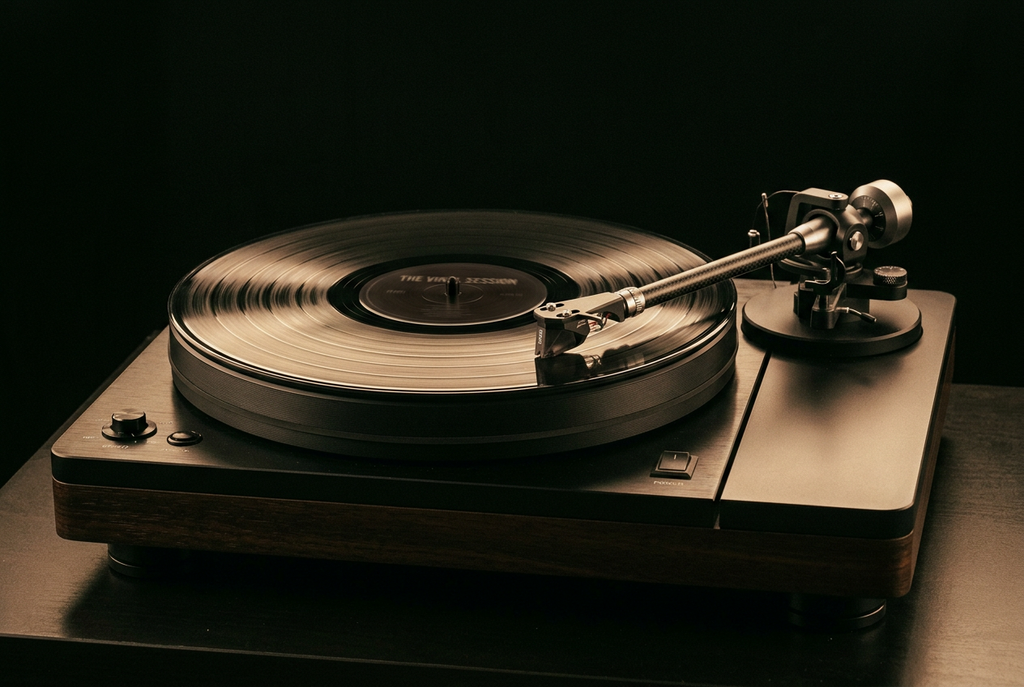
A turntable is the device responsible for rotating the record and allowing the stylus to read its groove.
A basic vinyl playback system includes several important components:
-
Turntable
-
Cartridge
-
Stylus
-
Tonearm
-
Phono preamplifier
-
Amplifier
-
Speakers
Some modern turntables have built-in phono preamplifiers, while others require an external phono stage.
The quality and compatibility of these components can significantly influence the final listening experience.
What Is a Cartridge?
The cartridge is attached to the tonearm and holds the stylus.
Its job is to convert the stylus's physical movement into an electrical signal.
Two common cartridge technologies are:
Moving Magnet
Moving Magnet, or MM, cartridges are widely used because they offer a practical combination of performance, compatibility and ease of maintenance.
Moving Coil
Moving Coil, or MC, cartridges use a different design and are often associated with higher-end analogue systems. They can offer excellent detail and musical expression but may require more specialised equipment.
The choice between cartridge types depends on the rest of the system, listening preferences and budget.
Why Does Vinyl Sound Different From Streaming?
Vinyl and digital audio reproduce music using fundamentally different technologies.
Digital audio represents sound using numerical data. Streaming services can deliver extremely convenient access to music, often with high-resolution options depending on the service and subscription.
Vinyl uses a physical analogue groove.
However, saying that vinyl is automatically better than digital would be an oversimplification.
The final listening experience depends on many factors, including:
-
The original recording
-
Mastering
-
Record pressing quality
-
Turntable setup
-
Cartridge quality
-
Tracking alignment
-
Phono stage
-
Amplification
-
Speakers
-
Room acoustics
-
Personal listening preferences
A well-produced digital recording can sound outstanding. A poorly mastered or damaged vinyl pressing will not automatically sound better simply because it is analogue.
The appeal of vinyl is therefore not just about technical specifications. It is also about the way people interact with music.
Why Does Vinyl Have a Warm Sound?
Vinyl is often described as having a "warm" or "organic" sound.
Part of this perception comes from the characteristics of analogue playback and the mastering choices made for certain releases.
Vinyl also has physical limitations. Engineers have to account for groove spacing, tracking ability, bass information, playing time and other factors when preparing music for the format.
These constraints can influence the mastering and final presentation.
However, the idea that every vinyl record has a universally warmer or more natural sound is too simplistic. Different pressings can sound dramatically different, and mastering often plays a major role.
For serious listeners, the better question is not whether vinyl is automatically superior, but whether a particular pressing and playback system deliver the musical experience they enjoy.
Why Are Vinyl Records Popular Again?
The renewed popularity of vinyl is not simply a nostalgia trend.
For many listeners, records provide something that digital music does not: a physical relationship with an album.
Streaming encourages endless discovery and convenience. Vinyl encourages attention.
You select an album, remove the record from its sleeve, place it on the platter, cue the tonearm and listen.
There is also something special about album artwork. A large record sleeve gives artists and designers considerably more physical space to communicate the identity of an album.
For collectors, the record itself can become part of the story.
Vinyl Makes Listening More Intentional
One of the biggest attractions of vinyl is the listening ritual.
With streaming, changing from one song to another takes a second. With a record, there is a natural physical process involved.
You choose a record.
You inspect the artwork.
You clean the record if necessary.
You place it on the turntable.
You lower the tonearm.
Then you listen.
That process can encourage listeners to focus on an album rather than constantly skipping between tracks.
For some people, this is one of the strongest reasons vinyl still matters.
Vinyl Records Are Also Collectibles
Vinyl records can have value beyond their audio content.
Collectors may look for:
-
Original pressings
-
Limited editions
-
Audiophile releases
-
Coloured vinyl
-
Picture discs
-
Signed records
-
Rare albums
-
Special reissues
-
Different international pressings
Condition is particularly important. A record that has been carefully stored and played with a properly maintained stylus can remain enjoyable for decades.
The sleeve and original packaging can also contribute to a record's collectability.
How Should Vinyl Records Be Stored?
Proper storage is essential if you want your records to remain in good condition.
Keep records:
-
Vertically rather than flat in large stacks
-
Away from direct sunlight
-
Away from excessive heat
-
Away from moisture
-
Inside appropriate inner sleeves
-
In protective outer sleeves when possible
Avoid touching the playing surface unnecessarily. Oils and dirt from your fingers can accumulate on the record and affect playback.
Records should also be cleaned using suitable record-cleaning equipment rather than household cleaning products.
Does Vinyl Need a Lot of Maintenance?
Vinyl is relatively straightforward to maintain, but it does require more care than streaming.
Your maintenance routine should include:
Clean Your Records
Dust and debris can affect playback and contribute to unwanted noise.
Keep the Stylus Clean
A dirty stylus can affect sound quality and may potentially damage records over time.
Check Cartridge Alignment
Proper cartridge alignment helps the stylus track the groove correctly.
Maintain Tracking Force
The cartridge should operate within the manufacturer's recommended tracking-force range.
Keep the Turntable Stable
A stable surface helps reduce unwanted vibration.
These details may seem small, but they can make a substantial difference to analogue playback.
How to Start a Vinyl Collection
If you are new to vinyl, you do not need to buy hundreds of records immediately.
Start with albums you genuinely enjoy.
Your first collection could include:
-
Your favourite albums
-
Classic records you have always wanted to own
-
New releases from artists you follow
-
Well-regarded audiophile pressings
-
Records recommended by experienced listeners
The goal should be to build a collection that you actually want to listen to.
There is no need to buy a record simply because it is rare.
Buying a Vinyl Record in Gurgaon
For listeners searching for a vinyl record in Gurgaon, the experience is often about more than finding a particular album.
A good hi-fi environment can help you understand the relationship between the record, turntable, cartridge, amplifier and speakers.
At SoundTrails, listeners can explore the broader world of high-fidelity audio and understand how analogue sources can fit into a modern home audio system.
Whether you are purchasing your first record or expanding an established collection, it is worth considering the entire playback chain rather than treating the record as an isolated product.
Finding a Vinyl Record in Delhi
The demand for a vinyl record in Delhi reflects the wider resurgence of physical music among collectors, audiophiles and younger listeners discovering analogue audio for the first time.
Delhi and the wider NCR region have a growing community of people interested in dedicated music systems, turntables and high-fidelity playback.
For new listeners, the most important step is understanding what kind of listening experience they want before investing in equipment.
A carefully selected record collection paired with a properly configured turntable can become the centrepiece of a dedicated listening setup.
Vinyl vs Streaming: Which Is Better?
There is no universal winner.
|
Feature |
Vinyl |
Streaming |
|
Physical format |
Yes |
No |
|
Convenience |
Moderate |
Excellent |
|
Album artwork |
Large physical artwork |
Digital |
|
Music selection |
Limited to your collection |
Extremely large |
|
Physical listening ritual |
Strong |
Minimal |
|
Portability |
Low |
Excellent |
|
Maintenance |
Required |
Very little |
|
Collectability |
High |
Low |
|
Analogue playback |
Yes |
Usually digital |
|
Long-term ownership |
Physical copy |
Depends on service |
For convenience, streaming is difficult to beat.
For physical ownership, collecting and the listening ritual, vinyl offers something unique.
Many serious music lovers therefore use both.
Streaming can be ideal for discovering new artists and albums, while vinyl can provide a deeper physical connection with favourite recordings.
Is Vinyl Better for Audiophiles?
Vinyl remains an important source for many audiophiles, but audiophile listening is not about choosing a format based solely on popularity.
The quality of the complete system matters.
A high-quality vinyl setup can deliver excellent imaging, dynamics, tonal character and musical detail.
But the same listener may also enjoy a high-resolution digital source through the same amplifier and speaker system.
Instead of asking, "Is vinyl better?", it can be more useful to ask:
"Which version of this recording sounds best to me?"
That question recognises the importance of mastering, pressing quality, playback equipment and personal preference.
Why Vinyl Still Matters in the Digital Age
Vinyl matters because music is not only about data.
It can also be about ownership, memory, design, ritual and emotion.
A vinyl record gives you something tangible. It can remind you where you bought it, who introduced you to the album, when you first listened to it, or why a particular song became important.
There is also a sense of permanence.
A streaming catalogue can change. Albums can disappear from platforms, licensing arrangements can shift and services can come and go.
A physical record sitting on your shelf remains yours.
That does not make vinyl more convenient than streaming. It makes it different.
Frequently Asked Questions About Vinyl Records
What is a vinyl record?
A vinyl record is a physical analogue audio format in which music is represented by variations in a continuous groove. A stylus tracks the groove and a cartridge converts its movement into an electrical audio signal.
Are vinyl records analogue?
Traditional vinyl records are an analogue audio format. However, the source recording may have been created, mixed or mastered using digital technology before being transferred to vinyl.
Do vinyl records sound better than digital music?
Not necessarily. Vinyl and digital audio have different characteristics, and sound quality depends on mastering, recording quality, playback equipment, pressing quality and personal preference.
How long does a vinyl record last?
A properly manufactured and well-maintained vinyl record can last for decades. Proper storage, careful handling, clean records and correct stylus setup can help preserve it.
Why do vinyl records crackle?
Dust, dirt, scratches, static electricity and imperfections in the record can contribute to clicks and crackling. Some surface noise can also be inherent to certain pressings.
Can you play vinyl records without an amplifier?
A turntable normally requires a suitable amplification stage and speakers or powered speakers. Some modern turntables and powered speaker systems have amplification or phono amplification built in.
Is vinyl expensive to start?
A vinyl setup can range from relatively affordable entry-level systems to highly sophisticated audiophile systems. The important thing is to build a balanced system rather than spending heavily on one component while neglecting the others.
Should beginners buy new or used records?
Both can be good choices. New records offer predictable condition, while used records can provide access to older pressings and interesting editions. When buying used vinyl, inspect the record surface and sleeve condition carefully.
Where can I find a vinyl record in Gurgaon?
Listeners looking for a vinyl record in Gurgaon can explore specialist audio retailers and hi-fi stores such as SoundTrails, where the focus extends beyond the record itself to the complete music playback experience.
Can I find a vinyl record in Delhi?
Yes. Delhi and NCR have an active community of music collectors and audiophiles, with opportunities to explore new releases, classic albums, used records and specialist audio equipment.
The Future of Vinyl
Vinyl is unlikely to replace streaming, nor does it need to.
The two formats serve different purposes.
Streaming offers immediate access to an enormous library of music. Vinyl offers a physical and deliberate listening experience.
The continued interest in turntables and records suggests that listeners still value having a tangible connection with music.
For some, vinyl is a serious audiophile source. For others, it is a collectible. For many, it is simply a more enjoyable way to sit down and listen to an album.
That versatility is precisely why the format has survived.
Final Thoughts
A vinyl record is much more than a circular piece of plastic.
It is a carefully engineered physical representation of sound, and playing it involves a fascinating chain of mechanical and electrical processes. From the microscopic groove to the stylus, cartridge, phono stage, amplifier and speakers, every part contributes to the final listening experience.
More importantly, vinyl gives music a physical presence.
In a world where millions of songs are available instantly, the act of choosing one record, placing it on a turntable and listening from beginning to end can feel surprisingly meaningful.
Whether you are searching for a vinyl record in Gurgaon, exploring options for a vinyl record in Delhi, or simply curious about analogue audio, vinyl remains a format worth understanding.
At SoundTrails, the philosophy is not about choosing vinyl over digital. It is about helping music lovers discover how different sources, components and systems can bring their favourite recordings to life.
Because ultimately, the best audio system is not the one with the most impressive specifications.
It is the one that makes you want to listen to more music.
Latest Posts
29
Oct