Benefits of Using Optical Fiber Cable for High-Speed Networks
In today’s connected world, network performance directly affects how efficiently people work, communicate, stream content, transfer data, and manage connected devices. As internet usage continues to grow, traditional copper-based networking solutions can face limitations in terms of bandwidth, transmission distance, interference, and scalability.
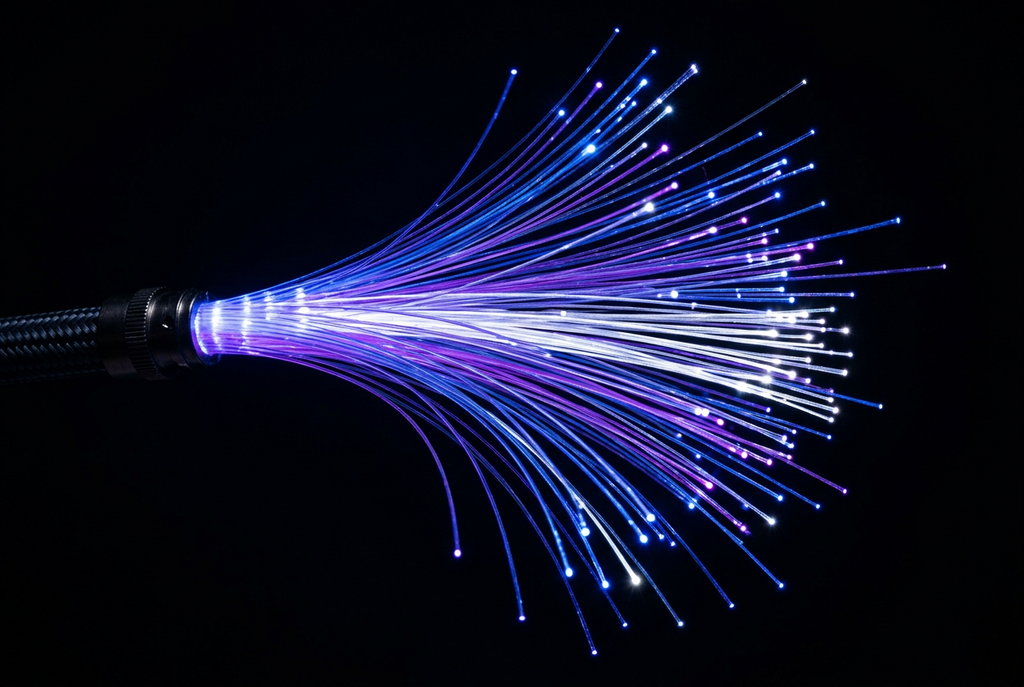
Optical fiber cable has emerged as one of the most reliable technologies for high-speed data transmission. Instead of carrying information through electrical signals, fiber optic cables transmit data using pulses of light through extremely thin strands of glass or specialized plastic. This allows them to deliver high bandwidth, low signal loss, and excellent transmission speeds.
For homes, offices, commercial spaces, studios, data-intensive environments, and high-performance audio and entertainment setups, choosing the right networking infrastructure can make a significant difference. Understanding the benefits of optical fiber technology can help users make a more informed decision when planning or upgrading their network.
What Is an Optical Fiber Cable?
An optical fiber cable is a communication cable designed to transmit digital information using light. A typical fiber optic cable consists of one or more optical fibers protected by layers of cladding, coating, strengthening material, and an outer jacket.
The central fiber carries the light signal, while the surrounding cladding helps keep the light within the core through the principle of total internal reflection.
Unlike conventional copper Ethernet cables that transmit electrical signals, optical fiber uses light to move information. This fundamental difference gives fiber optic networks several advantages, particularly when large amounts of data need to travel quickly and reliably.
Depending on the network requirement, fiber systems can use different types of fiber, including single-mode and multimode fiber. The appropriate choice depends on factors such as distance, bandwidth requirements, infrastructure, equipment, and intended application.
Why Is Optical Fiber Important for High-Speed Networks?
Modern networks are expected to handle much more than basic web browsing. High-resolution video streaming, cloud applications, large file transfers, online collaboration, surveillance systems, smart devices, gaming, and other bandwidth-intensive applications can place considerable demands on network infrastructure.
A network may have a high-speed internet connection, but its real-world performance can still be affected by the quality and capability of the internal networking infrastructure.
Optical fiber can provide a high-capacity pathway for data transmission, making it particularly useful where speed, reliability, and future scalability are important considerations.
1. Extremely High Data Transmission Speeds
One of the biggest benefits of optical fiber is its ability to support very high data transmission speeds.
Because fiber optic technology transmits information using light, it can support substantial bandwidth over appropriate network equipment and infrastructure. This makes it suitable for applications where large volumes of data need to move quickly between devices, servers, switches, or network locations.
For businesses, this can mean faster access to cloud platforms, quicker file transfers, smoother video conferencing, and more efficient communication between networked systems.
For consumers, a well-designed fiber network can support demanding applications such as high-resolution streaming, online gaming, smart home systems, and simultaneous use of multiple connected devices.
2. Greater Bandwidth for Data-Heavy Applications
Speed and bandwidth are related but not identical. Bandwidth refers to the amount of data that a network can accommodate over a given period.
Modern households and businesses often have numerous devices connected simultaneously. Computers, smartphones, smart TVs, security cameras, network storage systems, printers, servers, and other connected equipment can all consume network resources.
Optical fiber provides substantial bandwidth capacity, making it well suited to environments where multiple users and devices need to access large amounts of data simultaneously.
This is particularly valuable for businesses that rely on cloud-based applications, centralized storage, video production, large databases, or other data-intensive workflows.
3. Excellent Performance Over Long Distances
Copper networking cables can experience signal attenuation as transmission distances increase. Fiber optic technology is designed to transmit signals efficiently over considerably longer distances.
This makes optical fiber particularly useful for large offices, commercial buildings, campuses, industrial environments, and infrastructure where network devices are located far apart.
For longer network links, fiber can help maintain strong signal performance without requiring the same type of signal regeneration that may be necessary with some copper-based systems.
4. Lower Signal Loss
Signal loss can affect network performance, especially over longer cable runs.
Optical fiber generally offers low attenuation, allowing data to travel significant distances while maintaining signal integrity. This is one reason fiber technology is widely used in telecommunications and other environments where reliable long-distance data transmission is essential.
Lower signal degradation can contribute to a more dependable network when the infrastructure has been correctly designed, installed, terminated, and maintained.
5. Resistance to Electromagnetic Interference
One of the important technical advantages of optical fiber is its resistance to electromagnetic interference, commonly referred to as EMI.
Copper cables carry electrical signals and can potentially be affected by electromagnetic interference from electrical equipment, power cables, motors, and other sources.
Fiber optic cables transmit information through light rather than electrical current. As a result, they are not susceptible to electromagnetic interference in the same way as copper cables.
This makes fiber particularly useful in environments where electrical interference could otherwise create networking challenges.
6. Improved Network Reliability
A high-speed network is useful only when it remains stable and dependable.
Optical fiber can contribute to network reliability because of its resistance to electromagnetic interference, low signal attenuation, and high transmission capacity.
However, the cable itself is only one part of the equation. Reliable performance also depends on compatible switches, transceivers, connectors, termination quality, network design, and professional installation.
Choosing quality components and ensuring proper installation can help users get the expected performance from a fiber-based network.
7. Better Support for High-Resolution Media
High-resolution media has become increasingly common. 4K and higher-resolution video, large media files, professional photography, video production, and high-quality streaming can require substantial bandwidth.
For environments where large media files need to move between devices or storage systems, fiber networking can provide the capacity needed to handle demanding workloads.
This can be especially relevant for creative professionals, production environments, studios, businesses, and entertainment-focused setups.
8. Reduced Network Congestion
When a network is constantly handling large volumes of data, insufficient capacity can contribute to congestion and slower performance.
A high-capacity fiber infrastructure can help accommodate demanding data workloads. When combined with appropriately configured networking equipment, it can provide a strong foundation for handling multiple high-bandwidth activities.
For example, a business could simultaneously support cloud applications, video conferencing, large file transfers, surveillance systems, and other connected services without relying entirely on a limited network backbone.
9. Enhanced Future Scalability
Technology requirements rarely remain static.
A network that works comfortably today may become insufficient as the number of users, connected devices, applications, and data requirements increases.
Installing a capable fiber infrastructure can provide a strong foundation for future network upgrades. Depending on the fiber type, equipment, and network architecture, the same physical fiber infrastructure may support progressively higher transmission capabilities as networking technologies evolve.
This can make fiber an attractive option for organizations planning their infrastructure for long-term use.
10. Improved Security Characteristics
Optical fiber can also offer advantages from a physical security perspective.
Because fiber does not transmit data through conventional electrical signals, intercepting a fiber connection generally requires physical access to the cable and specialized equipment. Any attempt to access or manipulate a fiber link can potentially disrupt the signal, making unauthorized physical interception more difficult than simply tapping a conventional electrical connection.
However, fiber should not be considered a complete cybersecurity solution. Network security still requires appropriate encryption, authentication, firewalls, access controls, monitoring, and other security measures.
Optical Fiber Cable in Delhi: Why It Matters for Modern Networks
For businesses, offices, commercial properties, studios, and technology-focused environments, selecting suitable networking infrastructure is becoming increasingly important. Those researching Optical Fiber Cable in Delhi should consider more than simply the advertised transmission speed.
The correct fiber solution depends on several factors, including the required distance, bandwidth, number of connected devices, type of networking equipment, installation environment, and future expansion plans.
A professional assessment can help determine whether single-mode or multimode fiber is appropriate and what supporting equipment may be required for the network.
Optical Fiber Cable in Faridabad for High-Speed Connectivity
Growing businesses and modern commercial environments in Faridabad increasingly depend on reliable digital connectivity for everyday operations. When evaluating Optical Fiber Cable in Faridabad, users should look at the complete network architecture rather than choosing a cable based only on speed specifications.
Cable quality, connectors, transceivers, switches, installation practices, cable routing, and compatibility all influence the final performance of a fiber network.
Working with knowledgeable professionals can help ensure that the selected infrastructure is appropriate for the specific application and can accommodate future networking requirements.
Fiber Optic vs Copper Cable: Which Is Better?
There is no single cable type that is ideal for every situation. Copper Ethernet cables remain practical for many short-distance network connections and can be cost-effective for certain installations.
Fiber becomes particularly attractive when the requirements involve:
-
High bandwidth
-
Long transmission distances
-
Reduced electromagnetic interference
-
Large data transfers
-
Network backbone connections
-
High-performance business networks
-
Data-intensive media environments
-
Future network scalability
The best choice ultimately depends on the network's technical requirements, budget, installation environment, and future plans.
What Should You Consider Before Installing Optical Fiber?
Before investing in a fiber network, consider the following factors:
Network Distance
Determine the distance between network devices. Longer links may benefit significantly from fiber infrastructure.
Required Bandwidth
Assess how much data your network currently handles and how much it may need to handle in the future.
Fiber Type
Single-mode and multimode fiber have different characteristics and applications. The right option should be selected according to the network design.
Compatible Equipment
Fiber cables work alongside components such as switches, optical transceivers, patch panels, connectors, and other networking equipment. Compatibility is essential.
Installation Quality
Even high-quality fiber can perform poorly if it is incorrectly terminated, excessively bent, damaged, contaminated, or improperly installed.
Future Expansion
Consider whether your network may require more users, devices, bandwidth, or longer connections in the future.
How SoundTrails Can Help With High-Performance Connectivity
For a technology-focused business such as SoundTrails, understanding connectivity is important when building modern audio, entertainment, and connected environments.
High-quality networking infrastructure can play a role in supporting network-enabled audio systems, streaming platforms, media servers, connected entertainment equipment, and other digital technologies.
SoundTrails can help customers understand the role of networking within a broader high-performance entertainment ecosystem and identify solutions that are appropriate for their setup.
The objective should not simply be to choose the fastest cable available. Instead, the network should be designed around the complete system, including connected devices, equipment compatibility, data requirements, installation conditions, and future expansion.
Frequently Asked Questions About Optical Fiber Networks
Is optical fiber faster than traditional Ethernet cable?
Optical fiber can support very high transmission speeds and substantial bandwidth. However, the actual network speed depends on the fiber type, networking equipment, transceivers, switches, configuration, and other components.
Is fiber optic cable suitable for home networks?
Yes. Fiber can be used in residential environments, particularly where high-speed internet, media streaming, smart home devices, network storage, or high-bandwidth applications are important.
Does fiber optic cable improve internet speed?
Fiber infrastructure can support high-speed internet connections, but installing fiber inside a network does not automatically increase the speed of an internet service beyond what the internet connection and network equipment support.
Is fiber better for long-distance networking?
Fiber is particularly well suited to longer network links because it generally experiences lower signal attenuation than copper over comparable distances.
Does fiber require special equipment?
Yes. Depending on the network architecture, fiber installations may require compatible switches, optical transceivers, connectors, patch panels, media converters, or other components.
How long does an optical fiber cable last?
A properly installed and protected fiber optic cable can have a long service life. Its longevity depends on installation quality, environmental conditions, physical protection, and how the infrastructure is maintained.
Final Thoughts
Optical fiber has become an important foundation for modern high-speed networking because of its combination of bandwidth, transmission distance, low signal loss, interference resistance, reliability, and scalability.
For users building a new network or upgrading an existing one, the decision should go beyond simply comparing cable prices. The right solution should consider the complete network architecture, current requirements, future growth, equipment compatibility, and installation environment.
Whether the requirement is a business network, commercial installation, media environment, or connected entertainment setup, a professionally planned fiber infrastructure can provide a strong foundation for reliable high-speed connectivity.
For customers exploring advanced networking and connected entertainment solutions, SoundTrails can be a useful starting point for understanding how high-performance network infrastructure can complement a modern technology setup.