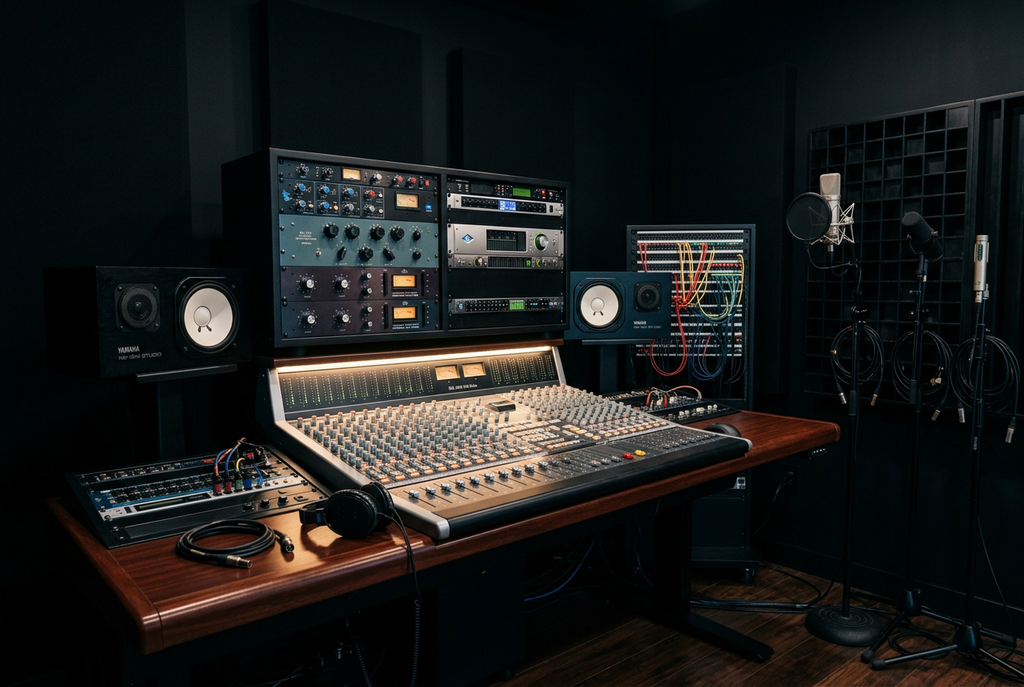
What Professional Audio Equipment Do You Need for a Complete Sound Setup?
A great sound system is not simply a collection of expensive speakers and amplifiers. A complete professional audio setup is a carefully matched chain of components that work together to deliver clarity, detail, dynamics, tonal balance, and an immersive listening experience.
Whether you are setting up a premium home theatre, a dedicated music listening room, a recording environment, a commercial space, or a high-end entertainment system, choosing the right professional audio equipment is essential. Every component, from the source and amplifier to the speakers, cables, and acoustic treatment, contributes to the final sound.
For listeners who want to build a serious audio system, understanding what each component does can make the buying process much easier. This guide explains the essential professional audio equipment required for a complete sound setup and how to choose components that work well together.
What Is a Complete Professional Audio Setup?
A complete audio setup is a system in which every stage of the audio signal chain is properly connected and matched.
A typical setup may include:
-
Audio source
-
Digital-to-analog converter or DAC
-
Preamplifier
-
Integrated amplifier or power amplifier
-
Speakers
-
Subwoofer
-
Speaker cables
-
Interconnect cables
-
Power management
-
Streaming equipment
-
Acoustic treatment
-
Accessories and speaker stands
Not every system requires every component. For example, an integrated amplifier can combine the functions of a preamplifier and power amplifier, while active speakers may have amplification built into the speaker itself.
The ideal configuration depends on your room, listening preferences, equipment requirements, and budget.
1. Start With a High-Quality Audio Source
The source is where your audio signal begins.
In a modern system, this could be a music streaming service, network streamer, CD player, turntable, television, computer, or digital media player.
The quality of the source matters because your downstream equipment can only reproduce the information contained in the original signal. A high-resolution digital recording paired with a capable source can provide significantly greater detail and realism than a low-quality compressed file.
For digital listening, a dedicated network streamer or high-quality digital source can provide convenient access to music while maintaining excellent sound quality.
For vinyl enthusiasts, the source chain may include:
Turntable → Cartridge → Phono Stage → Preamplifier → Amplifier → Speakers
Each component has an important role in preserving the character of the recording.
2. DAC: Converting Digital Audio Into Sound
A DAC, or digital-to-analog converter, converts digital audio information into an analog signal that can be amplified and played through speakers.
Almost every digital audio device contains some form of DAC. However, a dedicated DAC can offer improvements in conversion quality, noise control, connectivity, and overall system performance.
A quality DAC can be particularly valuable when using:
-
High-resolution music files
-
Network streamers
-
Computers
-
Digital music servers
-
CD transports
-
High-end streaming systems
When selecting a DAC, consider supported formats, sample rates, connectivity, and compatibility with your existing equipment.
3. Preamplifier: The Control Centre of Your System
A preamplifier manages and controls the audio signal before it reaches the power amplifier.
Its primary functions may include:
-
Selecting different audio sources
-
Controlling volume
-
Adjusting system settings
-
Managing analog and digital inputs
-
Providing appropriate signal levels to the amplifier
In a traditional separates-based system, the preamplifier and power amplifier are independent components.
A dedicated preamplifier can provide greater flexibility for listeners who want to build a sophisticated system and upgrade individual components over time.
4. Integrated Amplifier: A Practical High-End Solution
An integrated amplifier combines a preamplifier and power amplifier into one component.
For many music lovers, this is an excellent solution because it reduces system complexity without necessarily compromising performance.
A good integrated amplifier can provide:
-
Source selection
-
Volume control
-
Amplification
-
Multiple connectivity options
-
Streaming capabilities in some models
-
Digital and analog inputs
Integrated amplifiers are especially useful when you want a clean and efficient system with fewer components.
The key is matching the amplifier to your speakers. Power output alone should not determine your purchase. Speaker sensitivity, impedance characteristics, room size, listening distance, and amplifier design all matter.
5. Power Amplifier for Greater Control and Performance
In a separates system, the power amplifier is responsible for driving the speakers.
A dedicated power amplifier can provide greater power reserves and control, particularly when paired with demanding speakers or used in a larger room.
Important factors include:
-
Continuous power output
-
Speaker impedance compatibility
-
Current delivery
-
Distortion
-
Channel configuration
-
Amplifier topology
-
Overall system matching
A powerful amplifier is not automatically better. The goal is to find an amplifier that complements your speakers and listening environment.
6. Speakers: The Most Important Sound-Producing Component
Speakers ultimately transform the electrical audio signal into sound waves, making them one of the most critical components in the entire system.
Speaker selection should consider:
-
Room size
-
Listening distance
-
Speaker sensitivity
-
Impedance
-
Frequency response
-
Placement options
-
Music preferences
-
Amplifier compatibility
Different speaker designs produce different sonic characteristics.
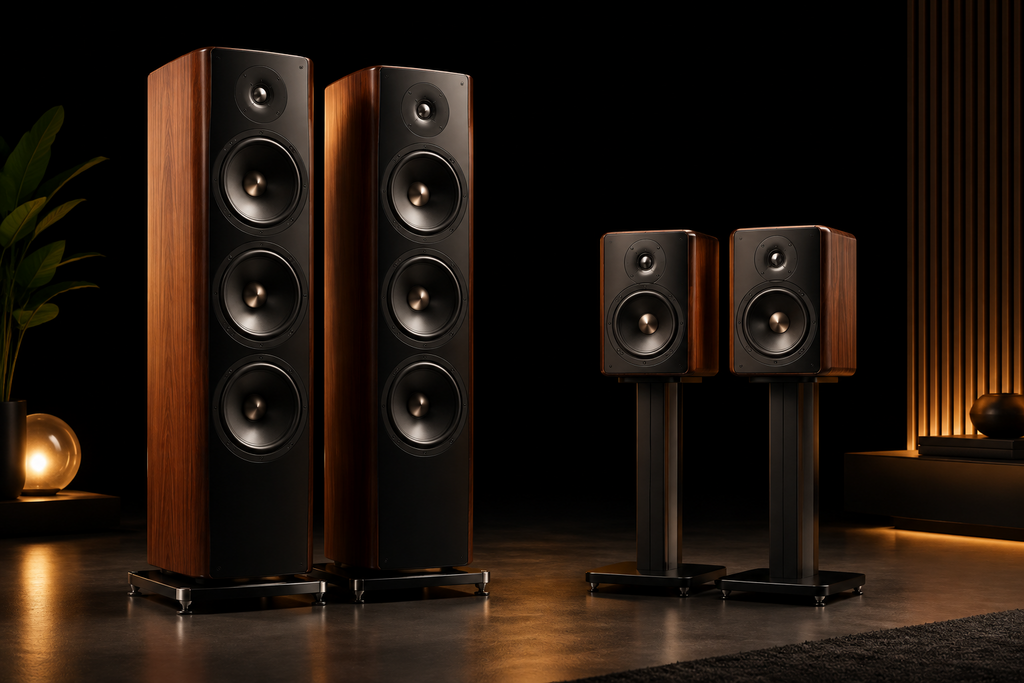
Floorstanding speakers
Floorstanding speakers are suitable for larger rooms and listeners who want a full-range presentation without necessarily adding a subwoofer.
Bookshelf or stand-mount speakers
These compact speakers can deliver exceptional detail and imaging when positioned correctly. They are often ideal for smaller rooms or dedicated stereo listening setups.
Centre channel speakers
In a home theatre system, the centre channel plays a critical role in dialogue reproduction.
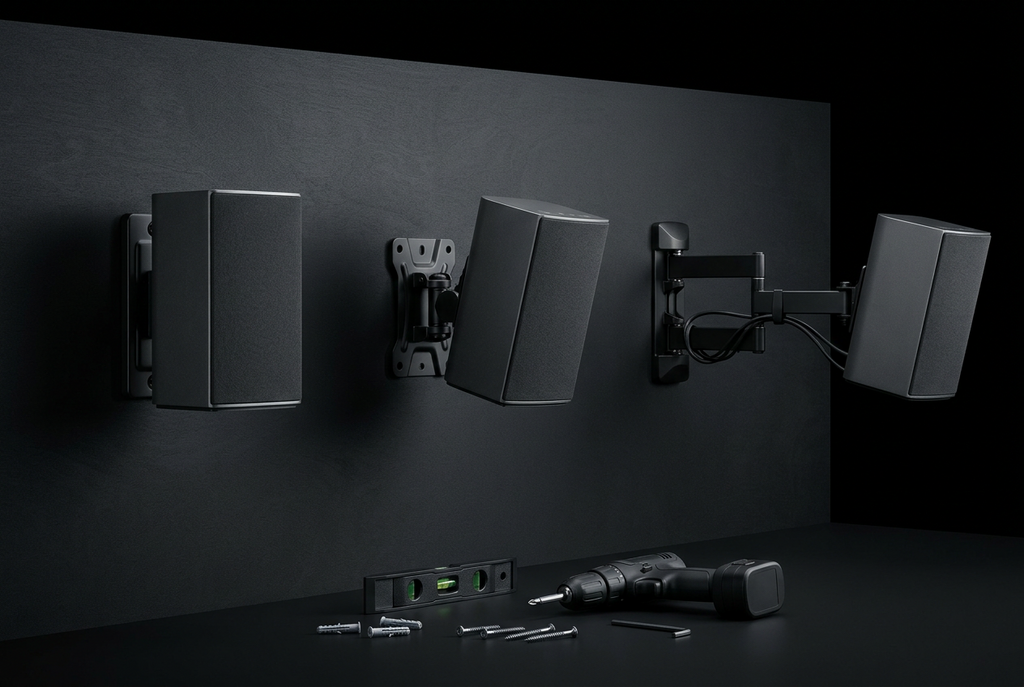
Surround speakers
Surround speakers help create a three-dimensional cinematic environment.
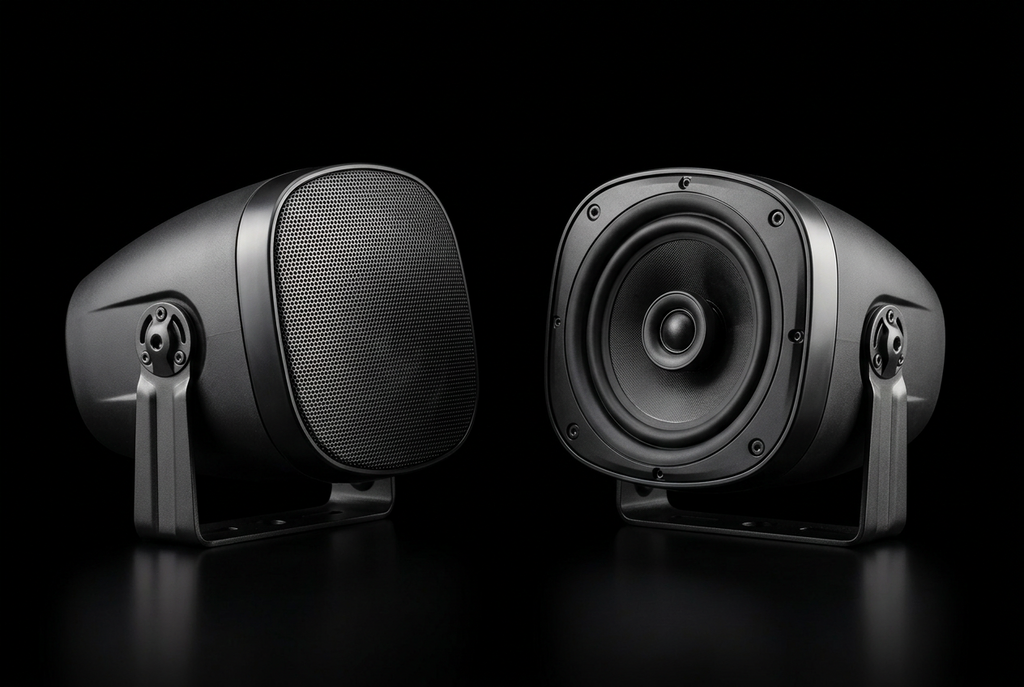
In-wall and in-ceiling speakers
These can provide a discreet installation for home theatres and architectural audio systems.
7. Add a Subwoofer for Deep Bass
A subwoofer handles the lower frequencies that conventional speakers may struggle to reproduce.
A properly integrated subwoofer can add:
-
Deeper bass
-
Greater impact
-
More realistic cinematic effects
-
Better reproduction of low-frequency instruments
-
A more complete full-range presentation
Subwoofer integration requires careful attention to crossover frequency, phase, volume, and placement.
Simply adding more bass does not necessarily improve a system. The objective is smooth integration between the subwoofer and main speakers.
8. Professional Audio Equipment in Delhi: What Should You Look For?
If you are looking for Professional Audio equipment in Delhi, it is important to evaluate the complete system rather than choosing individual products based solely on specifications or price.
Delhi has a wide range of audio requirements, from premium home theatres and dedicated listening rooms to commercial installations and professional entertainment environments.
When selecting equipment, consider whether the retailer or audio specialist can help with:
-
System design
-
Speaker selection
-
Amplifier matching
-
Source selection
-
Installation
-
Acoustic considerations
-
Equipment compatibility
-
Demonstration and auditioning
-
Future upgrades
A professional audio system should be designed around your room and listening requirements rather than built by randomly combining popular products.
9. Cables and Interconnects Matter, But System Matching Comes First
Cables are responsible for transferring audio signals and power between different components.
Common cable types include:
-
RCA interconnects
-
XLR balanced cables
-
Speaker cables
-
HDMI cables
-
Optical cables
-
Coaxial digital cables
-
Ethernet cables for networked systems
Cable quality should be appropriate for the system, but it is important to maintain perspective.
Before spending heavily on premium cables, prioritize the fundamental elements of your setup, including speakers, amplification, source quality, room acoustics, and system matching.
Good cables should provide reliable connectivity, appropriate construction, and compatibility with the equipment.
10. Streaming Equipment for Modern Audio Systems
Streaming has become an important part of contemporary audio.
A network streamer can connect your sound system to music services and network-based music libraries.
Depending on the product, streaming equipment may support:
-
Wi-Fi
-
Ethernet
-
High-resolution audio
-
Multi-room audio
-
Music streaming platforms
-
Internet radio
-
Network-attached storage
-
Smartphone control
For listeners who primarily consume digital music, a quality streaming component can become the central source of the entire system.
11. Turntable and Phono Stage for Vinyl
Vinyl remains popular among serious music enthusiasts because of its unique listening experience and physical connection to music.
A vinyl setup generally requires:
Turntable + Cartridge + Phono Stage + Amplifier + Speakers
The phono stage is particularly important because the signal generated by a turntable cartridge is much lower than a standard line-level signal.
Some amplifiers include a built-in phono input, while others require a separate phono preamplifier.
12. Acoustic Treatment Is Often Overlooked
Even the finest audio equipment cannot perform at its best in a poorly treated room.
Room acoustics influence:
-
Bass response
-
Reflections
-
Imaging
-
Clarity
-
Soundstage
-
Vocal intelligibility
-
Overall tonal balance
Furniture, walls, flooring, windows, curtains, and room dimensions all affect sound.
Acoustic panels, bass traps, rugs, curtains, and strategic speaker placement can help manage unwanted reflections and resonance.
This is why professional audio system design should consider the room as part of the equipment.
13. Speaker Placement Can Transform Your Listening Experience
You do not necessarily need to buy new equipment to improve your sound.
Correct speaker positioning can make a significant difference.
For a stereo system, start by considering:
-
Distance between the speakers
-
Distance from the rear wall
-
Distance from side walls
-
Listening position
-
Speaker toe-in
-
Tweeter height
-
Room symmetry
Small adjustments can change imaging, soundstage, bass response, and clarity.
For this reason, equipment demonstration and professional setup can be extremely useful before making a final purchase.
14. Professional Audio Equipment in Faridabad for Different Listening Needs
Those searching for Professional Audio equipment in Faridabad should consider the intended application before selecting products.
A compact stereo system for an apartment requires a different approach from a dedicated home theatre, commercial audio installation, or large entertainment space.
Before purchasing, identify:
-
How large is the room?
-
What type of music do you listen to?
-
Do you primarily stream, use physical media, or both?
-
Do you need a stereo or surround sound system?
-
How loud do you typically listen?
-
Are you planning future upgrades?
-
Is the system intended for music, movies, or both?
Answering these questions can narrow down the equipment category and prevent unnecessary spending.
15. Home Theatre vs Stereo Audio Setup
The right equipment also depends on whether your priority is music or movies.
Stereo setup
A traditional stereo system generally consists of:
Source → DAC/Preamp → Amplifier → Left & Right Speakers
This configuration focuses heavily on stereo imaging, musical detail, tonal accuracy, and soundstage.
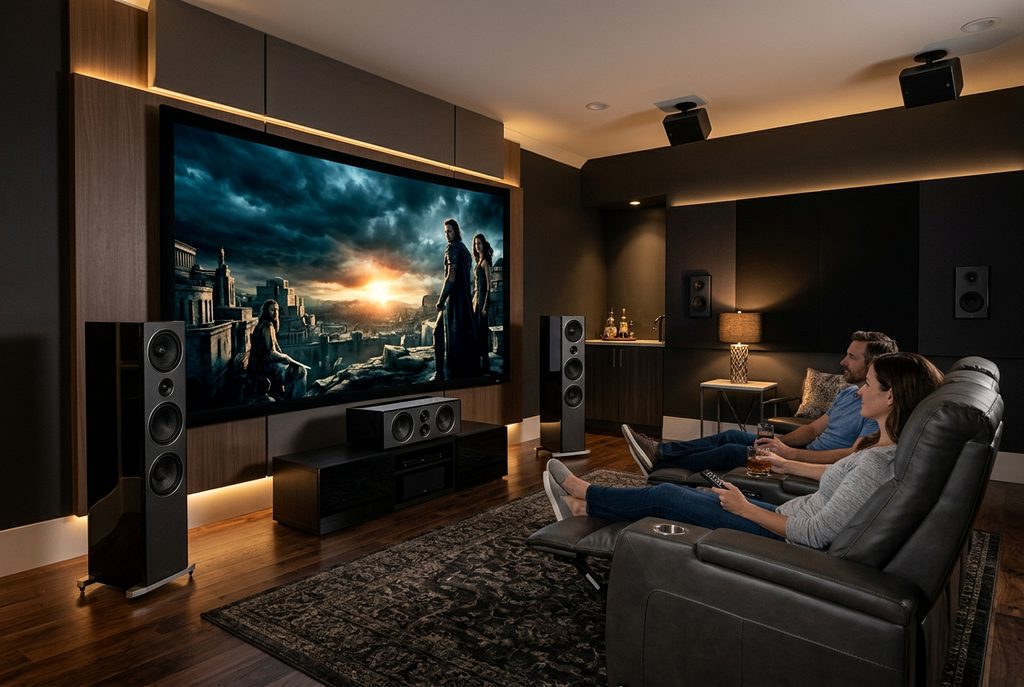
Home theatre setup
A home theatre may include:
Source → AV Processor/AV Receiver → Amplification → Centre Speaker → Front Speakers → Surround Speakers → Subwoofer
Additional speakers may be used for immersive formats depending on the room and system design.
Neither setup is universally better. The best configuration depends on how you intend to use it.
16. How Do You Match an Amplifier With Speakers?
Amplifier and speaker matching is one of the most important aspects of building an audio system.
Do not look at wattage alone.
Consider:
-
Speaker impedance
-
Speaker sensitivity
-
Amplifier power
-
Room size
-
Listening distance
-
Desired listening volume
-
Amplifier current capability
A speaker that is difficult to drive may benefit from an amplifier with strong current delivery and sufficient power reserves.
Conversely, highly sensitive speakers may perform exceptionally well with lower-powered amplification.
This is where expert guidance and equipment auditioning can be valuable.
17. Why Auditioning Audio Equipment Matters
Audio specifications can tell you a lot, but they cannot completely describe how a system will sound in your room.
Listening to equipment allows you to evaluate:
-
Tonal character
-
Vocal clarity
-
Bass control
-
Soundstage
-
Instrument separation
-
Dynamics
-
Imaging
-
Listening fatigue
Two systems with similar specifications can sound noticeably different.
A proper demonstration can help you identify the combination that best suits your preferences.
18. Build the System Around Your Priorities
There is no universal list of "best" audio equipment.
A serious system should be built around the listener.
For example:
For music lovers:
Focus on source quality, stereo speakers, amplifier matching, DAC performance, and room acoustics.
For movie enthusiasts:
Prioritize an AV processor or receiver, centre channel, surround speakers, subwoofer integration, and immersive audio compatibility.
For vinyl enthusiasts:
Invest carefully in the turntable, cartridge, phono stage, amplification, and speaker combination.
For minimalist setups:
An integrated streaming amplifier paired with high-quality speakers can deliver an elegant and capable system with fewer components.
19. Common Mistakes to Avoid
Buying speakers without considering the room
A speaker that performs beautifully in one room may not deliver the same result in another.
Choosing an amplifier based only on wattage
Power specifications are important, but speaker sensitivity and impedance characteristics matter too.
Ignoring room acoustics
The room is part of the sound system.
Buying components without system matching
Individual products may be excellent but still produce an underwhelming combination.
Spending too much on accessories too early
Build the core system first. Upgrade accessories after the major components are properly matched.
Never auditioning equipment
Whenever possible, listen before buying.
20. How SoundTrails Can Help You Build a Complete Audio System
Building a high-quality audio system requires more than selecting premium equipment. It requires understanding how individual components interact with one another and how the system will perform in a particular room.
SoundTrails helps audio enthusiasts explore premium sound solutions based on their listening requirements, room characteristics, preferred music, and system goals.
Whether you are building a dedicated stereo system, upgrading an existing setup, creating a home theatre, or exploring high-end streaming and vinyl, the right combination of source components, amplification, speakers, and accessories can make a substantial difference.
The goal is not simply to own expensive equipment. The goal is to create a system that makes music and movies more engaging, detailed, natural, and immersive.
Frequently Asked Questions
What equipment do I need for a basic professional audio setup?
A basic high-quality setup can include a source, integrated amplifier, speakers, speaker cables, and appropriate interconnects. A DAC, streamer, subwoofer, or separate preamplifier may be added depending on your requirements.
Is an amplifier necessary for professional speakers?
Passive speakers require amplification, while active speakers have amplification built into them. The correct choice depends on your preferred system configuration.
Do I need a separate DAC?
Not necessarily. Many modern amplifiers, streamers, CD players, and AV receivers already contain DACs. A separate DAC becomes useful when you want specific performance, connectivity, or upgrade flexibility.
Are expensive speakers always better?
Not necessarily. Speaker performance depends on design, room compatibility, amplification, placement, and personal listening preferences. The best speaker is the one that works well within your complete system.
How important is room acoustics?
Room acoustics are extremely important. Reflections, resonances, room dimensions, and speaker positioning can significantly influence what you hear.
Should I choose stereo or home theatre?
Choose stereo if music listening is your primary priority. Choose home theatre if movies, television, gaming, and immersive surround sound are central to your requirements.
Can professional audio equipment be upgraded later?
Yes. A properly planned system can be upgraded gradually. For example, you can begin with an integrated amplifier and speakers and later add a dedicated DAC, streamer, subwoofer, or separate amplification.
Final Thoughts
A complete sound setup is a carefully balanced ecosystem. The source provides the music, the DAC handles digital conversion, the preamplifier manages the signal, the amplifier provides power, and the speakers transform that signal into the sound you actually experience.
However, the system does not end with the equipment. Speaker placement, room acoustics, cables, listening position, and proper component matching all contribute to the final result.
For anyone investing in professional audio, the smartest approach is to focus on system synergy rather than individual specifications. Start with your room and listening habits, identify the right equipment categories, audition suitable combinations, and build a system that can evolve with you.
With the right planning and guidance, professional audio equipment can turn an ordinary listening space into a deeply engaging musical and cinematic experience.