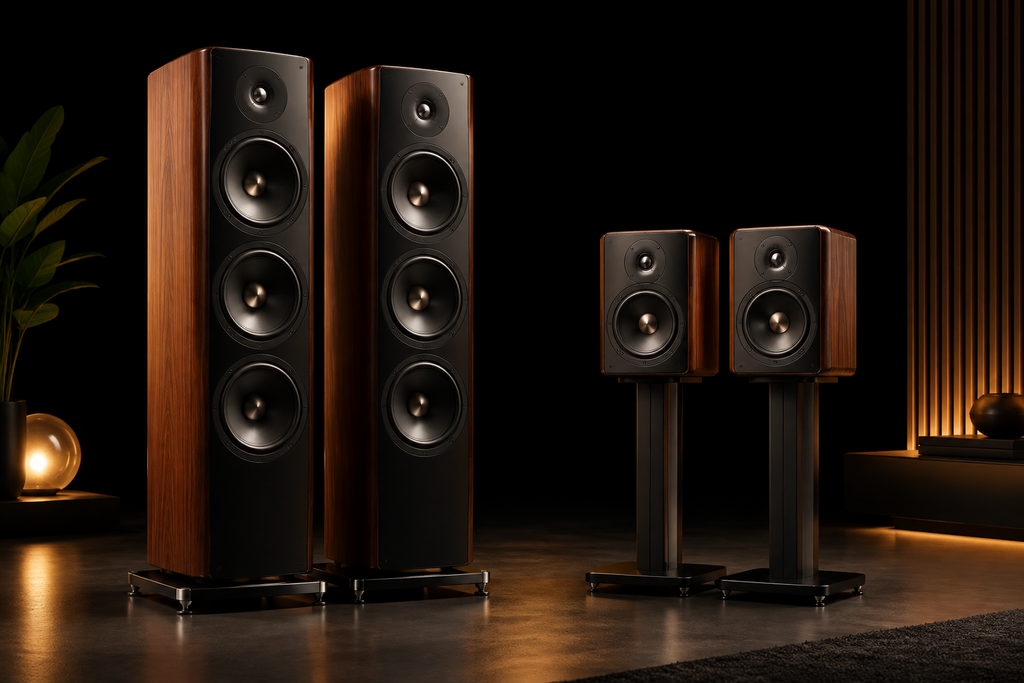
Are Floor Standing Speakers Better Than Bookshelf Speakers?
Choosing the right speakers can completely change how you experience music, movies, and other forms of entertainment at home. Two of the most popular options for a serious audio setup are floor standing speakers and bookshelf speakers. But which one is actually better?
The answer is not as simple as saying one is superior to the other. Floor standing speakers and bookshelf speakers are designed for different listening environments, room sizes, performance expectations, and budgets. The right choice depends on how much space you have, the type of sound you prefer, your listening distance, and whether you plan to add a subwoofer.
For listeners exploring Floor Standing Speakers in Gurgaon, floor standing models can deliver a larger, more powerful presentation with deeper bass and greater scale. On the other hand, people looking for Bookshelf speakers in Gurgaon may prefer their compact design, flexibility, and excellent imaging, particularly in smaller rooms or nearfield listening setups.
In this guide, we will compare both speaker types and help you decide which is the better choice for your listening room.
Floor Standing vs Bookshelf Speakers: What Is the Difference?
The most obvious difference is their physical size.
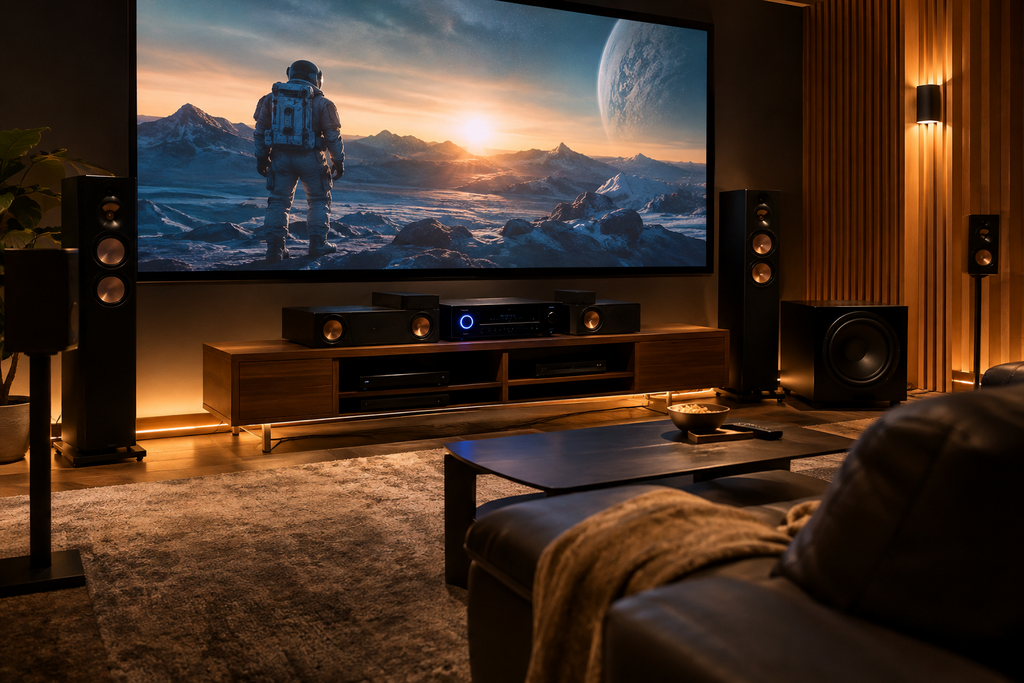
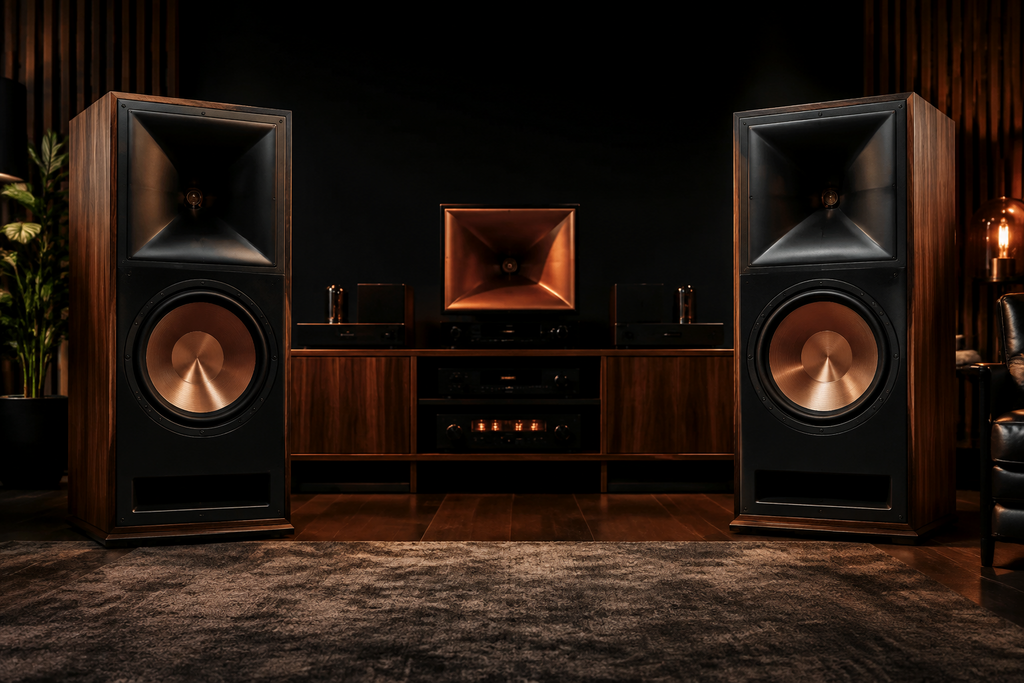
Floor standing speakers, also called tower speakers, are designed to stand directly on the floor. Their larger cabinets generally allow manufacturers to incorporate multiple drivers, including dedicated woofers, midrange drivers, and tweeters. This can help them reproduce a wider range of frequencies with greater authority.
Bookshelf speakers, despite their name, are not necessarily designed to be placed inside a bookshelf. They are compact speakers that are typically positioned on dedicated speaker stands, shelves, cabinets, or other stable surfaces.
Their smaller cabinets make them easier to integrate into rooms where space is limited. They can also produce impressive detail and soundstage performance when properly positioned.
The key difference is therefore not simply size. It is how each speaker design interacts with your room, listening position, amplification, and overall audio system.
Are Floor Standing Speakers Better Than Bookshelf Speakers?
Floor standing speakers are not automatically better than bookshelf speakers. They are generally better suited to listeners who want greater scale, deeper bass, higher output capability, and a more full-range presentation from the main speakers.
Bookshelf speakers can be the better option when you want excellent imaging, a smaller footprint, easier placement, and the flexibility to build a system around a dedicated subwoofer.
For example, a large living room used for both music and home cinema may benefit from the effortless scale of floor standing speakers. A smaller listening room, bedroom, office, or apartment may work better with high-quality bookshelf speakers.
The quality of the individual speaker is also extremely important. A well-designed bookshelf speaker can outperform a poorly designed floor standing speaker in clarity, imaging, tonal balance, and musicality.
Floor Standing Speakers: Key Advantages
1. Bigger and More Immersive Sound
One of the biggest reasons people choose floor standing speakers is their ability to create a larger presentation.
Their cabinet volume and multiple-driver configuration can help produce a broad and powerful soundstage. This can make orchestral recordings, live performances, rock, electronic music, and cinematic soundtracks feel more immersive.
If you enjoy listening at moderate to high volumes, floor standing speakers can also provide a greater sense of scale.
2. Deeper Bass Response
Many floor standing speakers feature dedicated bass drivers. The additional cabinet volume gives designers more flexibility when engineering low-frequency performance.
This can result in stronger and deeper bass compared with many compact bookshelf speakers.
However, this does not mean that every floor standing speaker will automatically produce better bass. Room acoustics, speaker placement, amplifier matching, and speaker design all influence bass performance.
3. Higher Output Capability
A larger speaker system can often move more air and produce higher sound pressure levels with less strain.
This can be particularly useful for:
-
Large living rooms
-
Dedicated home theatres
-
Large listening spaces
-
High-volume music listening
-
Listeners who prefer a powerful presentation
4. No Separate Speaker Stands Required
Floor standing speakers are designed to stand on the floor, so you do not necessarily need to purchase separate speaker stands.
This can simplify installation and create a visually complete speaker system.
However, floor standing speakers still require careful positioning. Simply placing them against a wall or in a corner can negatively affect their tonal balance and bass response.
5. Excellent for Full-Range Music Listening
For listeners who want their main speakers to reproduce a broad frequency range without immediately adding a subwoofer, floor standing speakers can be an attractive choice.
They can offer a satisfying combination of bass, midrange presence, treble detail, dynamics, and soundstage scale.
Bookshelf Speakers: Key Advantages
1. Compact and Flexible
Bookshelf speakers are much easier to integrate into smaller spaces.
They can work particularly well in:
-
Bedrooms
-
Home offices
-
Small living rooms
-
Apartments
-
Secondary listening rooms
-
Desktop audio setups
Their smaller size also makes them easier to reposition while experimenting with speaker placement.
2. Excellent Imaging
One of the biggest strengths of high-quality bookshelf speakers is imaging.
When positioned correctly, compact speakers can create a precise stereo image where vocals and instruments appear to occupy distinct positions between the left and right speakers.
This can be particularly rewarding for acoustic recordings, jazz, vocals, classical music, and other genres where spatial information matters.
3. Ideal for Nearfield Listening
Bookshelf speakers can be an excellent choice when the listener sits relatively close to the speakers.
For example, a desktop or small dedicated listening setup may benefit from the controlled presentation of compact speakers.
4. Easy to Combine With a Subwoofer
A bookshelf speaker does not have to reproduce the deepest bass on its own.
Adding a quality subwoofer can allow the bookshelf speakers to focus more on the midrange and treble while the subwoofer handles the lowest frequencies.
A well-integrated 2.1 system can therefore deliver impressive full-range performance without requiring large floor standing speakers.
5. Often Easier to Position
Their smaller footprint gives you more flexibility when experimenting with toe-in, listening distance, speaker separation, and room placement.
This flexibility can be valuable because speaker placement can have a surprisingly large effect on perceived sound quality.
Floor Standing vs Bookshelf Speakers: Quick Comparison
|
Feature |
Floor Standing Speakers |
Bookshelf Speakers |
|
Physical size |
Large |
Compact |
|
Bass capability |
Usually deeper |
Usually more limited without a subwoofer |
|
Soundstage |
Large and expansive |
Precise and focused |
|
Maximum output |
Generally higher |
Generally lower |
|
Room suitability |
Medium to large rooms |
Small to medium rooms |
|
Stand required |
No |
Usually recommended |
|
Subwoofer required |
Optional |
Often beneficial |
|
Placement flexibility |
Moderate |
High |
|
Nearfield listening |
Less ideal in some setups |
Excellent |
|
Home theatre |
Excellent |
Excellent with a subwoofer |
|
Music listening |
Excellent |
Excellent |
|
Space requirements |
Higher |
Lower |
Which Is Better for a Small Room?
For a small room, bookshelf speakers are often the more practical choice.
Large floor standing speakers can sometimes overwhelm a small listening environment, particularly if they produce substantial low-frequency energy. Excessive bass can interact with room boundaries and create peaks or uneven response.
A well-positioned pair of bookshelf speakers can provide a balanced presentation while taking up significantly less visual and physical space.
However, room size alone should not determine your choice.
The speaker's actual design, sensitivity, impedance, bass response, listening distance, and room acoustics all matter.
A carefully selected floor standing speaker can still perform exceptionally well in a smaller room if it is appropriately positioned and matched with the system.
Which Is Better for a Large Room?
For larger rooms, floor standing speakers generally have an advantage.
Their larger cabinets and multiple drivers can help produce greater acoustic scale and output. This can prevent the sound from feeling undersized when the listening position is several metres away.
If your room is spacious and you enjoy powerful music playback, a good pair of tower speakers can provide a more convincing sense of scale.
Bookshelf speakers can still work in large rooms, especially when combined with a capable subwoofer and appropriate amplification. However, achieving the same effortless scale may require additional components.
Do Bookshelf Speakers Need a Subwoofer?
No, bookshelf speakers do not always need a subwoofer.
A good bookshelf speaker can produce surprisingly satisfying bass on its own. However, a subwoofer can extend the system's low-frequency response and add greater impact.
A subwoofer becomes particularly useful when you:
-
Listen to bass-heavy music
-
Watch movies
-
Want deeper low-frequency extension
-
Have a larger listening room
-
Want greater impact at higher volumes
The important factor is integration.
A subwoofer should not simply be turned up until the bass becomes obvious. Proper crossover settings, phase adjustment, placement, and level matching are essential for creating a seamless transition between the speakers and subwoofer.
Do Floor Standing Speakers Need a Subwoofer?
Not necessarily.
Many floor standing speakers are designed to deliver substantial bass without a subwoofer. For two-channel music listening, this can be more than sufficient for many listeners.
However, adding a subwoofer can still provide advantages.
A dedicated subwoofer can reproduce the lowest frequencies while allowing the main speakers and amplifier to focus on their respective strengths. This can be particularly useful in a home theatre environment.
Whether you need one ultimately depends on your speakers, room, listening preferences, and system configuration.
Which Is Better for Music?
Both can be excellent for music.
The better choice depends on the type of music you listen to and how you want it to sound.
Choose floor standing speakers if you prefer:
-
Large-scale orchestral recordings
-
Rock
-
Electronic music
-
Large live recordings
-
Strong bass
-
High listening levels
-
A spacious and powerful presentation
Consider bookshelf speakers if you prefer:
-
Vocals
-
Jazz
-
Acoustic music
-
Classical chamber recordings
-
Intimate recordings
-
Precise imaging
-
Nearfield listening
These are general tendencies rather than strict rules. Speaker voicing varies considerably between models, so the actual speaker design matters more than its category.
Which Is Better for Movies and Home Theatre?
For a dedicated home theatre or large entertainment room, floor standing speakers can be an excellent front left and right channel choice.
Their larger scale and output capability can complement cinematic soundtracks, particularly during action sequences and large musical scores.
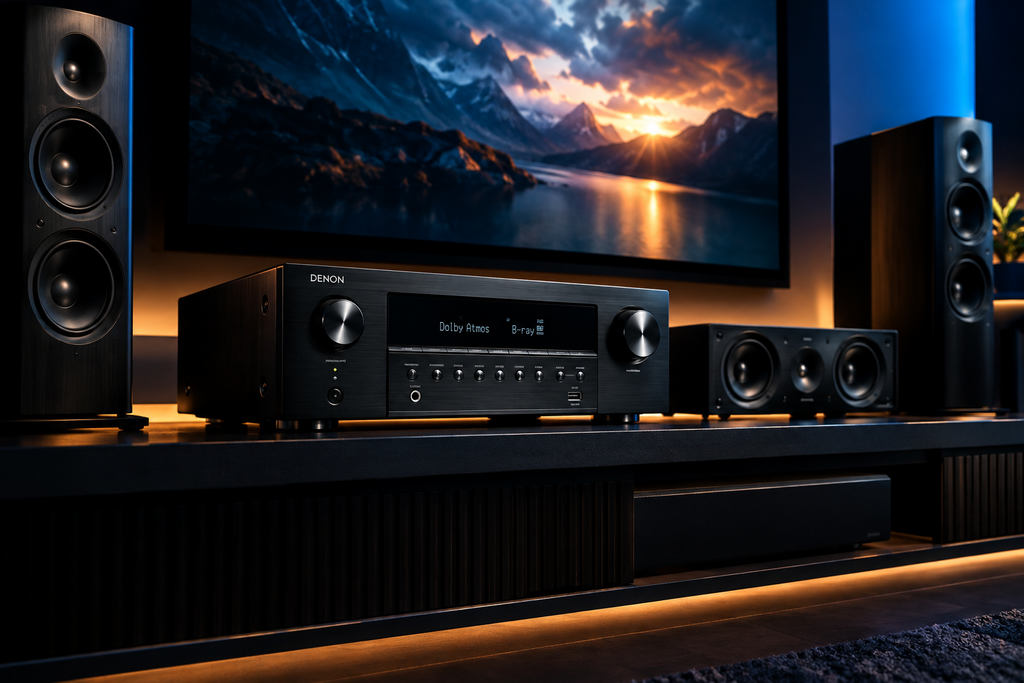
Bookshelf speakers can also work extremely well in a home theatre system. They are particularly useful when paired with a subwoofer and centre channel.
In fact, a carefully matched bookshelf speaker system with a capable subwoofer can outperform a mismatched collection of larger speakers.
The key is system integration.
What About Amplifier Matching?
Amplifier compatibility is an important consideration that is sometimes overlooked.
Before buying speakers, check specifications such as:
-
Nominal impedance
-
Minimum impedance
-
Sensitivity
-
Recommended amplifier power
-
Speaker power handling
A speaker that is difficult to drive may benefit from a more capable amplifier.
This is one reason why professional listening and system matching can be valuable when choosing an audio setup.
The objective is not simply to buy the most powerful amplifier or largest speaker. It is to create a balanced combination of source, amplifier, speakers, room, and listening position.
Floor Standing Speakers vs Bookshelf Speakers: Which Should You Buy?
A simple way to decide is to start with your room and listening habits.
Choose floor standing speakers if:
-
You have medium to large room
-
You want deeper bass from your main speakers
-
You listen at higher volumes
-
You want a large and immersive soundstage
-
You prefer a full-range stereo setup
-
You do not want speaker stands
-
You enjoy both music and home theatre
Choose bookshelf speakers if:
-
You have limited space
-
You listen at moderate volumes
-
You sit relatively close to your speakers
-
You value precise imaging
-
You are comfortable adding a subwoofer
-
You want greater flexibility with placement
-
You are building a compact stereo system
Are More Expensive Bookshelf Speakers Better Than Cheaper Floor Standing Speakers?
They can be.
Speaker performance is not determined simply by cabinet size.
A premium bookshelf speaker can feature sophisticated drivers, carefully engineered crossovers, advanced cabinet construction, and excellent dispersion characteristics.
A budget floor standing speaker may offer more physical size and bass output but not necessarily better resolution or imaging.
This is why comparing speakers within a realistic budget and listening to them in person can be much more useful than choosing based purely on specifications.
Why Speaker Placement Matters
Even an excellent speaker can sound disappointing when positioned incorrectly.
For both floor standing and bookshelf speakers, consider:
-
Distance from the front wall
-
Distance from side walls
-
Speaker separation
-
Listening distance
-
Toe-in angle
-
Ear-level alignment
-
Room reflections
-
Bass interaction with room boundaries
Bookshelf speakers should ideally be placed on sturdy stands at an appropriate listening height rather than directly on furniture that can resonate.
Floor standing speakers should also have enough space around them to perform as intended, depending on their design.
Small changes in placement can sometimes produce a larger improvement than changing components.
How Room Acoustics Affect Speaker Choice
Your room is effectively part of your audio system.
Hard floors, glass surfaces, bare walls, furniture, curtains, carpets, and room dimensions all influence reflections and resonance.
A speaker that sounds excellent in a showroom may sound different in your home.
This is particularly important with low frequencies. Certain room dimensions can reinforce specific bass frequencies while cancelling others.
Before choosing between bookshelf and floor standing speakers, consider the entire listening environment rather than focusing only on the speaker cabinet.
The Importance of Listening Before Buying
Online specifications can tell you about frequency response, sensitivity, impedance, and power handling. They cannot completely describe how a speaker will sound in your room.
Listening is therefore one of the most important parts of selecting a speaker.
If you are comparing Floor Standing Speakers in Gurgaon, visiting a dedicated audio showroom can help you understand differences in soundstage, tonal balance, bass response, dynamics, and detail.
Likewise, if you are considering Bookshelf speakers in Gurgaon, listening to different models with familiar music can help you identify which speaker presentation matches your preferences.
Bring recordings you know well. Listen to familiar vocals, instruments, bass lines, and live recordings. Pay attention not only to how impressive the speaker sounds initially but also to whether you enjoy listening for longer periods.
Final Verdict: Floor Standing or Bookshelf Speakers?
So, are floor standing speakers better than bookshelf speakers?
Not universally.
Floor standing speakers are generally the better choice when you want greater scale, deeper bass, higher output, and a full-range presentation from your main speakers.
Bookshelf speakers are often the better choice when space is limited, you value flexibility and imaging, or you plan to build a compact system with a dedicated subwoofer.
The most important consideration is not whether the speaker stands on the floor or sits on a stand. It is whether the speaker is properly matched to your room, amplifier, listening distance, music preferences, and overall audio system.
At SoundTrails, the goal should be to help you choose a system that sounds right for your space and listening preferences rather than simply recommending the largest or most expensive speaker.
Frequently Asked Questions
1. Are floor standing speakers better than bookshelf speakers?
Not necessarily. Floor standing speakers generally offer greater bass extension, output, and scale, while bookshelf speakers can provide excellent imaging, flexibility, and performance in smaller spaces.
2. Are bookshelf speakers good for a living room?
Yes. High-quality bookshelf speakers can work very well in living rooms, particularly when paired with suitable amplification and, when required, a subwoofer.
3. Do floor standing speakers have better bass?
They often have an advantage because their larger cabinets and dedicated bass drivers can provide deeper and more powerful low-frequency performance. However, speaker design and room acoustics also play major roles.
4. Do bookshelf speakers need stands?
Dedicated stands are generally recommended. They provide a stable platform and help position the tweeter at the appropriate height while reducing unwanted vibrations from furniture.
5. Can bookshelf speakers replace floor standing speakers?
Yes. A well-designed bookshelf speaker system can deliver exceptional sound. Adding a properly integrated subwoofer can extend the system's bass response and create a highly capable full-range setup.
6. Are floor standing speakers good for small rooms?
They can be, but careful selection and placement are important. A large speaker with excessive bass output may interact poorly with a small room.
7. Which speakers are better for home theatre?
Both can work well. Floor standing speakers can provide greater scale for front channels, while bookshelf speakers can be excellent when combined with a capable subwoofer and matching centre and surround speakers.
8. What should I choose for my first Hi-Fi system?
There is no universal answer. Start with your room size, listening distance, music preferences, amplifier, and budget. A well-matched bookshelf or floor standing system can both form the foundation of an excellent Hi-Fi setup.
Build the Right Audio System for Your Room
Choosing between bookshelf and floor standing speakers is ultimately about finding the right balance between sound, space, system compatibility, and personal preference.
Instead of choosing a speaker solely because it is bigger, consider how it will interact with your room and the rest of your audio system.
For listeners exploring Floor Standing Speakers in Gurgaon or Bookshelf speakers in Gurgaon, a dedicated listening experience can make the decision much easier. Hear different speakers, compare their presentation with familiar music, and evaluate how each system works with your room and amplifier.
The right speaker is not necessarily the biggest one.
It is the one that makes you want to keep listening.