How Many Channels Do You Need in a High-End AV Receiver? A Smart Guide for Premium Home Cinema Buyers
Choosing the right AV receiver is one of the most important decisions when building a serious home cinema system. While many buyers focus first on speakers or display size, the receiver is the true control center of a modern theatre setup-it manages amplification, signal processing, surround decoding, connectivity, and system integration.
For luxury homeowners building dedicated media rooms or premium living-room cinemas, one common question always appears early:
How many channels do you actually need in a high-end AV receiver?
The answer depends on how immersive you want your system to be, how large your room is, and whether you plan to expand in the future.
At SoundTrails, many clients exploring a premium AV receiver in Delhi NCR initially assume more channels automatically means better performance. In reality, the ideal receiver must match room design, speaker layout, and listening goals.
Whether you are designing a cinema room in Delhi, Gurugram, Noida, Faridabad, or Ghaziabad, understanding channel requirements helps avoid expensive mistakes.
What Does “Channels” Mean in an AV Receiver?
A channel refers to one independent amplified speaker output.
A 5-channel receiver powers five speakers.
A 7-channel receiver powers seven speakers.
A 9-channel receiver powers nine speakers, and so on.
Each channel controls a dedicated speaker position in surround sound playback.
For example:
5.1 System
Includes:
-
front left
-
center
-
front right
-
surround left
-
surround right
-
one subwoofer
This remains the foundation for many home cinema systems.
Why High-End Systems Often Need More Than 5 Channels
Modern cinema soundtracks are increasingly designed for immersive formats that place sound around and above the listener.
This means many luxury home theatres now move beyond traditional 5-channel systems.
7.1 Configuration
Adds:
-
two rear surround speakers
This improves rear movement and depth.
5.1.2 or 5.1.4
Adds height channels for immersive formats.
These height channels dramatically improve realism during:
-
rain scenes
-
aircraft movement
-
ambient environments
This is where a premium AV receiver becomes essential.
Because advanced receivers process these sound layers accurately.
When 7 Channels Are the Ideal Choice
For many premium living-room installations, a 7-channel receiver offers the best balance.
A 7-channel receiver works beautifully for:
-
medium-sized luxury rooms
-
premium living-room cinemas
-
flexible speaker layouts
It supports:
-
traditional 7.1 surround
or -
5.1 with two height speakers
For most homes, this creates a major upgrade over 5-channel systems without excessive complexity.
When 9 Channels or More Make Sense
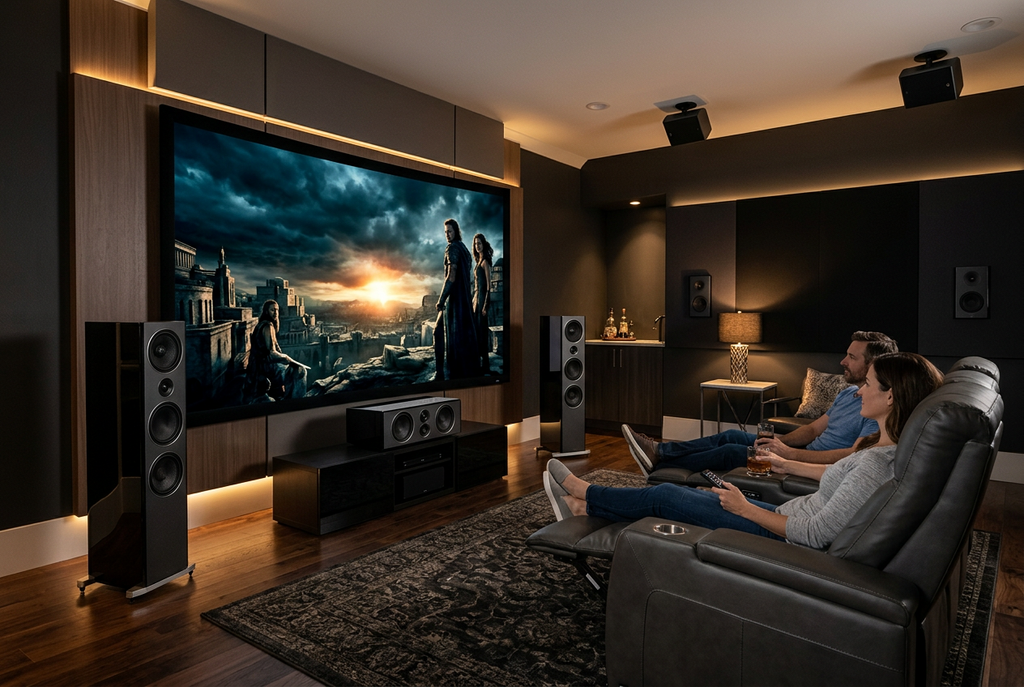
A 9-channel receiver becomes important when designing a more immersive dedicated theatre room.
Ideal For:
-
larger rooms
-
dedicated cinema spaces
-
premium acoustic designs
It allows layouts such as:
-
5.1.4
-
7.1.2
This means four overhead channels or additional rear immersion.
For serious cinema enthusiasts, this creates noticeably greater spatial realism.
Does More Channels Always Mean Better Sound?
Not necessarily.
The quality of amplification matters just as much as channel count.
A well-designed 7-channel premium receiver often performs better than a poorly matched 11-channel system.
What matters most:
-
amplifier quality
-
room acoustics
-
speaker matching
-
calibration
This is why system planning should always happen before choosing receiver specifications.
Why Denon and Marantz Are Trusted for High-End AV Receiver Systems
At SoundTrails, two brands frequently chosen for premium home cinema projects are:
-
Denon
-
Marantz
Denon: Powerful, Flexible, Cinema-Focused
Denon receivers are highly respected because they offer:
-
reliable power delivery
-
advanced surround decoding
-
strong room correction systems
-
excellent connectivity
They are ideal for:
-
dedicated cinema rooms
-
immersive multi-channel setups
-
large speaker systems
Denon is especially popular when clients want future upgrade flexibility.
Marantz: Musicality with Cinema Precision
Marantz is often chosen by buyers who want cinema performance plus refined music playback.
It is known for:
-
smoother tonal balance
-
premium internal design
-
highly musical stereo performance
This makes Marantz especially attractive for users combining:
-
home cinema
-
high-quality music listening
In luxury homes, Marantz often becomes the preferred choice when the same room serves both purposes.
How Room Size Changes AV Receiver Choice
Channel count should always reflect room dimensions.
Small to Medium Room
Best suited for:
-
5-channel or 7-channel systems
Medium to Large Room
Often benefits from:
-
7-channel or 9-channel receivers
Dedicated Theatre Room
Can justify:
-
9 channels or more
Without correct room planning, extra channels may deliver little real benefit.
Why Professional AV Design Matters Before Buying
Many buyers search for the best AV receiver in Delhi NCR but choose equipment before finalizing room design.
This creates common problems:
-
incorrect speaker spacing
-
underused channels
-
poor sound imaging
At SoundTrails, receiver selection happens only after evaluating:
-
room dimensions
-
seating layout
-
speaker placement
-
display type
This ensures the receiver actually serves the room.
Choosing for Future Expansion
A high-end AV receiver should also allow future upgrades.
Many buyers begin with:
-
5.1
Then expand later to:
-
7.1
-
height channels
-
dedicated cinema layouts
This makes upgrade-ready receivers a smart long-term investment.
Conclusion
The ideal AV receiver is not defined simply by the highest number of channels.
It is defined by how well those channels are used inside your room.
For most premium homes:
-
7 channels offer excellent flexibility
-
9 channels suit serious cinema spaces
-
quality amplification matters as much as channel count
With trusted brands like Denon and Marantz, the right receiver becomes the foundation of a long-term luxury entertainment system.